






Research
Unlimited Possibilities.
Chemical and biological processes are fundamentally governed by their organization in space and time. We go beyond conventional kinetic models to quantify how spatiotemporal patterns emerge from molecular interactions. Our work establishes a quantitative framework linking macroscopic reaction behavior with subcellular signaling dynamics.
Cellular signaling is initiated by membrane receptor activation driven by protein–protein interactions.We study how these interactions encode and propagate multidimensional information across molecular, cellular, and system levels. Our goal is to uncover the principles that connect receptor dynamics to cellular decision-making and phenotype.
We develop new therapeutic strategies based on nanoparticles, antibodies, proteins, and oligonucleotides.
Our approach focuses on precise control of biological systems through engineered nanoscale interactions.We aim to establish programmable platforms for targeted intervention in complex diseases.
Nanoparticle Chemistry
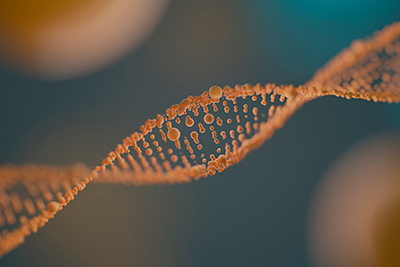
We design and synthesize functional nanomaterials with controlled composition, structure, and surface chemistry. These nanoprobes enable precise interaction with biological systems at the molecular and cellular levels. They serve as both sensors and actuators for probing and manipulating complex biological environments.
Advanced Microscopy
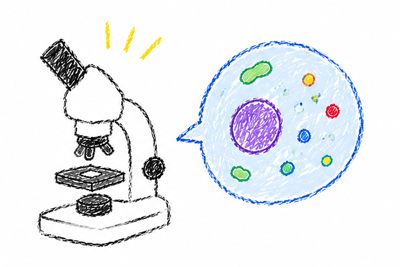
We develop and apply high-resolution optical imaging techniques to observe biological processes in real time. Our platforms enable single-molecule and live-cell measurements with high spatial and temporal precision. These approaches allow direct quantification of dynamic behaviors that are inaccessible by ensemble methods.
AI-based Prediction
We employ machine learning and statistical modeling to analyze complex and high-dimensional datasets. Our methods extract hidden patterns and infer underlying mechanisms from single-molecule and cellular data. This enables predictive understanding and quantitative interpretation of biological systems.
Cell + Protein Engineering

We use genetic and biochemical tools to engineer proteins and cellular systems with defined functions. These approaches allow precise control over molecular interactions and signaling pathways. They provide a platform to test mechanistic hypotheses and design functional biological systems.
We design and synthesize functional nanomaterials with controlled composition, structure, and surface chemistry. These nanoprobes enable precise interaction with biological systems at the molecular and cellular levels. They serve as both sensors and actuators for probing and manipulating complex biological environments.
We develop and apply high-resolution optical imaging techniques to observe biological processes in real time. Our platforms enable single-molecule and live-cell measurements with high spatial and temporal precision. These approaches allow direct quantification of dynamic behaviors that are inaccessible by ensemble methods.
We employ machine learning and statistical modeling to analyze complex and high-dimensional datasets. Our methods extract hidden patterns and infer underlying mechanisms from single-molecule and cellular data. This enables predictive understanding and quantitative interpretation of biological systems.
We use genetic and biochemical tools to engineer proteins and cellular systems with defined functions. These approaches allow precise control over molecular interactions and signaling pathways. They provide a platform to test mechanistic hypotheses and design functional biological systems.